Music Lessons Trends Changing Learning 2026
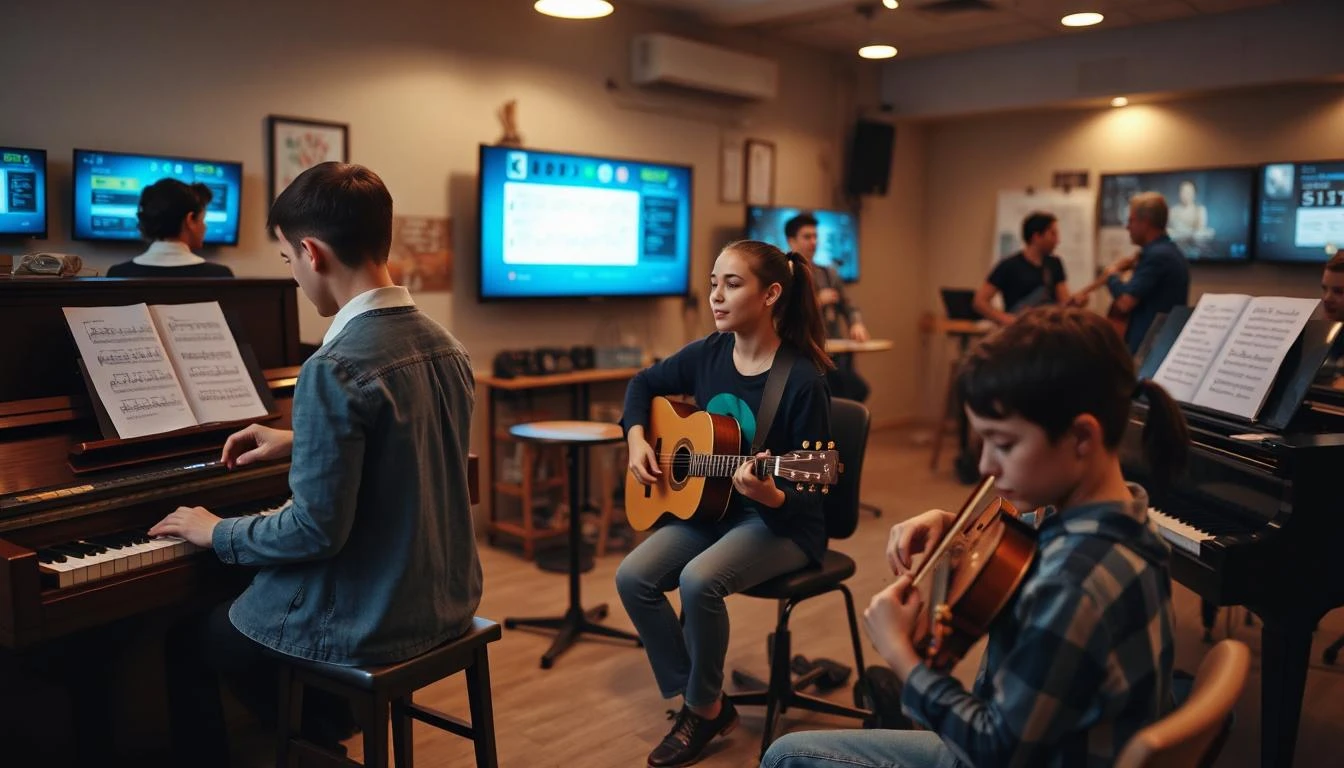
Music education is no longer a fixed classroom experience. It is evolving into a global digital ecosystem where learners interact with technology, mentors, and intelligent systems in real time. From mobile apps to immersive virtual environments, the way people learn music is shifting faster than ever, influenced by accessibility, personalization, and innovation.
In this rapidly expanding digital era, Music Lessons learning trends are redefining how beginners and professionals approach skill development, practice routines, and performance mastery. These trends are shaping a global music learning marketplace where anyone, anywhere, can access structured, adaptive, and highly engaging education without traditional limitations.
Evolution of Modern Music Learning Methods
Music learning today feels alive, responsive, and deeply interactive. It is no longer about memorizing notes from static sheets but about engaging with systems that respond to every mistake, improvement, and creative decision.
The transformation is happening across borders, especially within the global digital music marketplace where learners demand flexibility and instant feedback. This shift is not just technological,it is behavioral, reshaping how people commit to long-term learning journeys.
In this ecosystem, Music Lessons practice tips are increasingly integrated into platforms that guide learners step-by-step through structured improvement cycles, making practice sessions more intentional and measurable.
Artificial intelligence now plays a central role in shaping personalized instruction. As music technologist Daniel Rees explains, “The future of music learning is not about replacing teachers, but about extending their reach into every practice session through intelligent systems.”
AI powered music tutoring platforms
AI tutoring systems analyze pitch accuracy, timing precision, and stylistic expression in real time. They adapt lessons dynamically, ensuring learners receive feedback tailored to their exact performance level.
These platforms also simulate human-like instruction, allowing learners to feel guided even outside traditional lessons. This has become one of the strongest drivers of modern music education trends 2026, especially in remote learning environments.
Gamification in music education
Learning music now feels like progressing through a game. Points, challenges, and reward systems transform repetitive drills into engaging missions that sustain motivation over time.
Gamification is especially powerful for younger learners who respond strongly to visual achievement systems and competitive progression models.
Short form learning techniques
Short-form lessons are reshaping attention spans in music education. Instead of long theoretical sessions, learners now consume micro-lessons focused on specific techniques such as chord transitions or rhythm control.
This approach aligns with modern digital habits, where learners prefer fast, focused, and actionable content.
Digital Tools Transforming Practice Sessions
Practice is no longer a solitary repetition cycle. It has become an interactive experience supported by intelligent tools, real-time analytics, and immersive environments.
The global shift toward digital-first learning has created new expectations for precision, feedback, and engagement during practice sessions.
Smart ecosystems now allow learners to track performance patterns and refine skills with unprecedented accuracy, reshaping the entire definition of “practice time.”
Smart metronomes and apps
Smart metronomes are no longer simple tempo keepers. They now analyze rhythm consistency, detect timing errors, and adjust difficulty levels automatically.
These tools integrate seamlessly with mobile applications, creating structured practice environments that evolve with the learner’s progress.
Virtual reality music training
Virtual reality introduces fully immersive performance spaces where learners can play in simulated concert halls or jam with virtual ensembles.
This environment builds confidence and spatial awareness, helping musicians prepare for real-world performances in a controlled digital setting.
Cloud based collaboration for students
Cloud-based platforms enable global collaboration between students and instructors. Musicians from different continents can now co-create compositions in real time.
This evolution reflects the rise of a truly borderless global music learning marketplace, where creativity is shared instantly across cultures.
Personalized Learning in Music Education
Personalization has become the foundation of modern music learning systems. Every learner now follows a unique pathway shaped by behavior, progress, and interaction data.
This shift ensures that no two learning journeys are identical, making music education more inclusive and adaptive than ever before.
As music educator Helena Duarte notes, “Personalized learning transforms music from a subject into a living experience that adapts to the learner’s emotional and technical growth.”
Adaptive lesson plans based on skill level
Adaptive systems evaluate learner ability and adjust lesson difficulty in real time. Beginners receive simplified exercises, while advanced learners explore complex improvisation techniques.
This dynamic adjustment keeps learners engaged without overwhelming or under-challenging them.
Data driven progress tracking
Progress tracking now relies on detailed analytics, including accuracy rates, timing stability, and consistency metrics.
These insights help learners identify weaknesses and optimize their music learning improvement strategies with precision and clarity.
One on one remote mentoring systems
Remote mentorship connects learners with expert instructors worldwide. These systems offer personalized guidance without geographical limitations.
This model strengthens accessibility while maintaining high-quality instruction standards.
Embrace the Future of Music Learning in 2026
The future of music education is unfolding as a hybrid system where creativity, technology, and accessibility merge into one seamless experience. Learners now operate within a fully connected ecosystem that supports exploration, experimentation, and continuous improvement.
Search behaviors such as “best online music lessons for beginners 2026” and “affordable remote music tutoring platforms worldwide” highlight a growing demand for flexible, technology-driven education solutions.
The digital transformation of music learning is not just about tools,it is about redefining how people connect with sound, rhythm, and artistic expression in everyday life.